A Calm Living Room Layout For Everyday Use Checklist For First Time Readers
A practical step-by-step guide to a calm living-room layout for everyday use checklist for first-time readers, including preparation, instructions, common issues, tips, and next steps.

A Calm Living Room Layout For Everyday Use Checklist For First Time Readers
This guide provides a clear, step-by-step process for arranging a calm living room layout that encourages relaxation and everyday usability. It covers everything from decluttering and defining zones to arranging furniture for easy conversation and movement, adding cozy textures, and choosing soothing colors. The guide includes practical tips, common issues, quick reference situations, and frequently asked questions to help first-time readers create a peaceful, functional space without feeling overwhelmed.
Fast Answer
- Start by clearing the room of everything that doesn't serve a purpose or bring you joy, then divide the space into distinct zones for relaxation, entertainment, and reading.
- Arrange seating to face each other for conversation, keep pathways clear, and add soft lighting and textiles to instantly make the room feel calmer.
Before You Start
- Measure your living room dimensions and note the positions of doors, windows, and electrical outlets so you can plan furniture placement without guessing.
- Gather the furniture you intend to keep, and remove anything broken, unused, or that doesn't fit your goal of a calm, clutter-free space.
- Collect a few key items like a tape measure, painter's tape to outline zones on the floor, and a notepad to sketch layout ideas before you move heavy pieces.
- Decide on a calming color palette—cool neutrals, soft earth tones, or muted blues and greens—and have paint swatches or fabric samples handy to guide your choices.
Step-by-Step Instructions
Clear the Room Completely
Start by removing everything from the living room, including furniture, rugs, and decorative items. Place them in an adjacent area or a temporary holding spot. This blank canvas allows you to see the room's true dimensions and architectural features without distraction. As you clear each piece, consider whether it supports a calm, usable everyday space. Set aside anything that feels visually noisy, broken, or that you rarely use. This step is essential because a cluttered environment subconsciously raises stress levels, making it difficult to relax. Once the room is empty, you'll have a clear view of the floor space, which helps you plan a balanced layout. Take a few minutes to sweep or vacuum the floor to remove dust and allergens, creating a fresh start. This physical act of clearing also sets a mental intention for a peaceful room, making it easier to make mindful choices as you proceed.
Define Your Zones for Different Activities
Decide how you want to use the room: perhaps for reading, watching television, having conversations, or meditation. Mark these activity zones using painter's tape on the floor. For instance, place a tape rectangle where you'll put the sofa for the conversation area, and another for a reading nook near a window. Each zone should have a clear purpose and enough space to function without feeling cramped. Think about the natural flow of foot traffic—you should be able to walk from the door to a seat without weaving around furniture. Keeping zones distinct prevents the room from feeling chaotic and helps each area serve its intended function. This step matters because a well-defined layout guides the eye and movement, making the room feel more organized and serene. When you can move freely and know where to sit, your mind can rest easier.
Position the Main Seating for Conversation
Place your main seating—usually a sofa and one or two armchairs—so they face each other at an angle that invites conversation. Ideal distance between seats is about 8 to 10 feet if space allows, but adjust to your room's size. If you have a television, angle the seating so it's comfortable for viewing but not the dominant focus. Make sure the back of the sofa doesn't block a window or a main walkway. Use a diagonal placement for a more casual, calming feel. After positioning, sit in each seat and ensure eye contact is easy without straining. This check matters because a conversational layout makes the room feel welcoming and encourages social bonding, which is a key part of everyday comfort. When people can speak without raising their voices, a sense of calm naturally follows.
Support Each Zone with Practical Furniture
Add side tables, coffee tables, bookshelves, or floor lamps to each zone based on what the activity requires. For the reading nook, include a small side table for a cup of tea and a reading lamp. For the conversation area, place a coffee table within reach of the sofa—about 14 to 18 inches away from the seat edge—so people can set down drinks without stretching. Ensure each table top is not crowded; leave space for a book, remote, or mug. This step matters because every piece should serve a function without overwhelming the room. Cluttered surfaces add visual noise, which disrupts calm. By giving each zone its necessary furniture, you make the space usable for daily activities while maintaining an orderly, restful atmosphere. Take time to test that you can easily reach items from where you sit.
Layer Lighting for Ambience and Function
Illuminate your living room with three layers of light: ambient (overhead or general light), task (reading lamps or focused lights), and accent (floor lamps or candles to highlight art or corners). Avoid relying on a single harsh overhead light, which can feel clinical. Position reading lamps so they illuminate the page without glaring into the eyes. Use dimmer switches if possible, or plug lamps into a smart plug to adjust brightness. Turn off overhead lights in the evening and use warm, soft lamps to create a cozy glow. This step matters because proper lighting directly affects mood and can reduce eye strain. A calm room needs gentle, adjustable light that mirrors natural daylight. Test the lights at different times of day to ensure they meet your needs without creating harsh shadows.
Add Calming Textures and Personal Touches
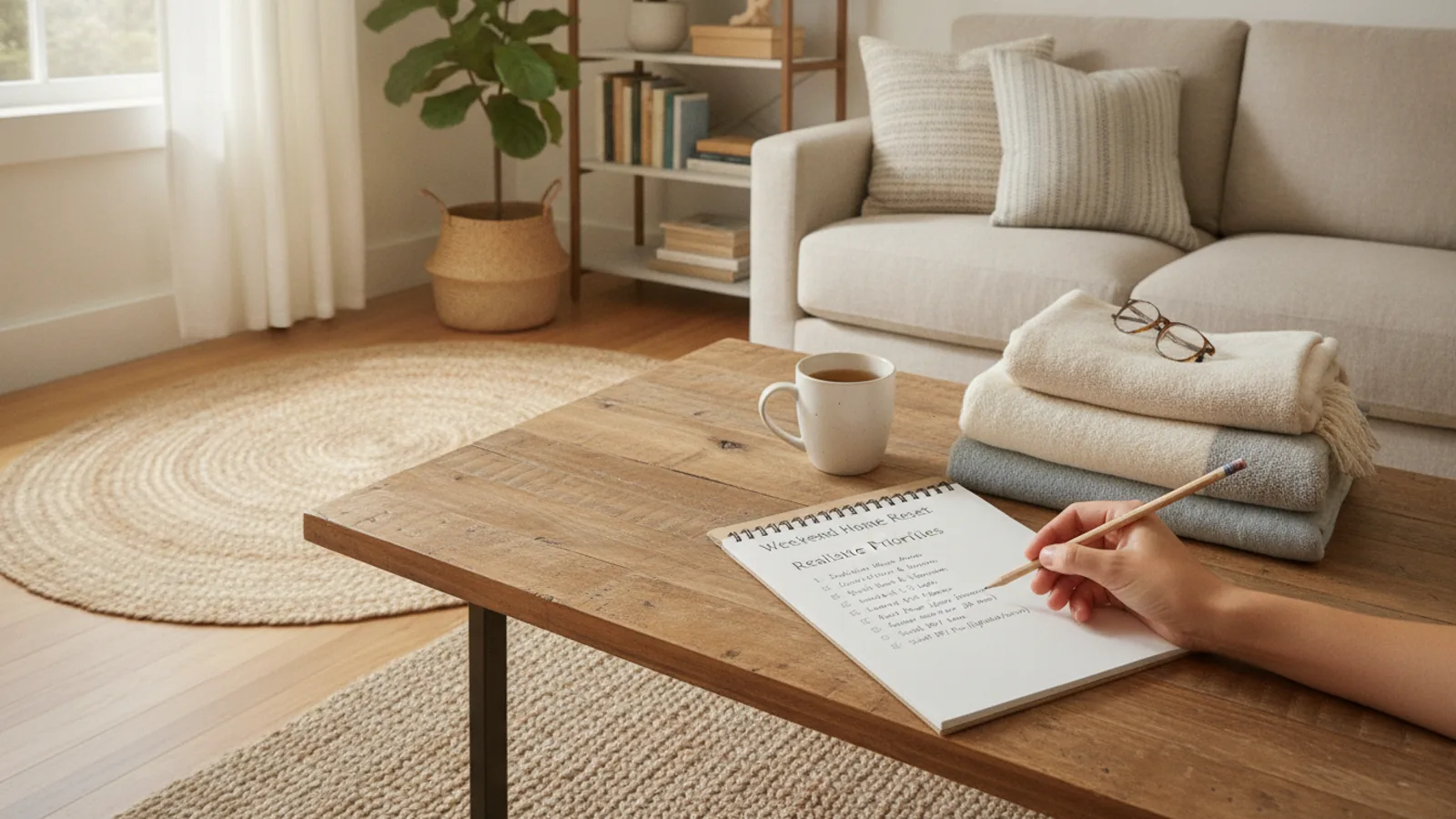
Bring in soft linens like a wool throw over the sofa, plush cushions, and a round woven rug under the coffee table. These textures add warmth and absorb sound, making the room feel quieter and more relaxing. Choose accessories in your calming color palette—limited to two or three colors to avoid visual chaos. Add living elements like a snake plant or a peace lily in a simple pot; they purify the air and connect you to nature. Personal touches like a shelf of favorite books or a framed photo should be deliberately placed to spark joy, not clutter. This step matters because a room that feels good to the senses promotes relaxation. Whatever you display, ensure it has a specific spot and doesn't crowd surfaces. With balance, your living room becomes a sanctuary you'll want to use every day.
Quick Reference
| Situation | Action | Why it helps |
|---|---|---|
| When you constantly trip over the coffee table's sharp corner | Move the coffee table away from the main walkway; consider a round or oval table instead, or shift it sideways so the corner faces a wall. | A rounded or repositioned table reduces the risk of painful bumps and keeps the flow of movement unobstructed, which is essential for calm everyday use. |
| When the room feels dark even with the overhead light on | Turn on multiple floor and table lamps and place one in a corner to bounce light softly around the walls. | Corner lighting provides ambient glows that minimize shadows, making the room feel brighter and more welcoming without harsh glare. |
| When you have more furniture than the room can hold comfortably | Remove one large piece or replace it with a smaller multifunctional item, like an ottoman with storage, to open up the floor space. | Overcrowding makes a room feel stressful; limiting furniture allows for ease of movement and breathing room, which is the foundation of calm comfort. |
Common Issues
- Furniture is pushed against all walls, making the room feel like a waiting room and conversation difficult.: Pull seating away from the walls to create an intimate floating group in the center of the room. Angle chairs towards the sofa to promote interaction and create a cozy conversation pit.
- Too much visual clutter from decorative items on every surface.: Limit surface decorations to one or two meaningful pieces per table. Use a covered basket or tray for remote controls and small items. Box up anything you don't use or love and store it out of sight.
- A mix of harsh overhead light and cold white bulbs makes the room feel sterile and tense.: Replace bulbs with warm-toned, soft white LEDs, and add dimmer switches or use floor lamps with 3-way settings. Rely on lamps for evening light and reserve overhead lights for cleaning or bright tasks.
Advanced Tips
- Use the 'golden rectangle' concept: arrange furniture so the length and width of the main seating area are in a ratio of about 1.6 to 1, which feels instinctively balanced and calming to the eye.
- Incorporate elements of biophilia by placing a small indoor fountain or a bowl of polished stones; the sound of water and natural textures lower stress without adding maintenance burdens.
- Consider painting the ceiling a shade lighter than the walls to make the room feel taller and more airy, which encourages a sense of open calm.
Final Checklist
- Every piece of furniture serves a clear purpose and there is no unused or purely decorative item that adds clutter.
- Walkways are at least 24-36 inches wide, so you can move through the room without sidestepping or squeezing.
- All lighting works together to create a warm, layered glow, and you have tested reading angles to avoid sharp glares.
- You have personalized the space with a few meaningful items, but surfaces remain at least 50% clear to keep the eye at rest.
FAQ
What's the ideal distance between sofa and coffee table?
Aim for about 14 to 18 inches between the edge of the sofa and the coffee table. This allows for comfortable legroom and easy reaching for drinks or books without making the space feel tight. For tight spaces, you can go down to 12 inches, but avoid less than that.
Should I worry about the television dominating the room?
It's common to want TV viewing, but a calm room shouldn't be controlled by the screen. Position the TV in a cabinet or on a wall that's not the main focal point, and angle your seating so that conversation is still possible without the TV as the center. Use a rug or artwork as an alternative focal point.
How do I make a small living room feel larger and calmer?
Use light, neutral colors on walls and large furniture; choose furniture with exposed legs to show floor space; use a large mirror to reflect light; and keep furniture snug but not crowded. Limit the number of separate pieces—choose multipurpose items, like a storage ottoman that can serve as a seat and table.