An Entryway Organisation Setup That Stays Tidy Checklist For First Time Readers
A practical step-by-step guide to an entryway organisation setup that stays tidy checklist for first-time readers, including preparation, instructions, common issues, tips, and next steps.
An Entryway Organisation Setup That Stays Tidy Checklist For First Time Readers
This guide provides a step-by-step method for organizing your entryway so it stays tidy with minimal effort. Designed for first-time readers, it covers practical decluttering, smart storage, and daily habits that keep the space inviting and functional. You'll learn how to sort items, choose the right containers, and create a simple routine to maintain order. The focus is on making the entryway a smooth transition zone for you and your guests, with everything you need at hand but neatly placed.
Fast Answer
- Start by clearing everything out, then sort items into keep, relocate, or discard, and only keep items used daily or weekly in the entryway.
- Install a small shelf or hooks for keys, mail, and outerwear, and use a tray or bowl for small items to prevent clutter from accumulating on surfaces.
Before You Start
- Collect three boxes or bags labeled 'keep', 'relocate', and 'discard' to make sorting quick and decisive.
- Gather cleaning supplies like an all-purpose cleaner, microfiber cloths, and a vacuum to clean the area after decluttering.
- Take measurements of your entryway walls, floor space, and any existing furniture so you can choose storage that fits without cramping.
- Decide on your daily routine items (keys, phone, sunglasses, dog leash, etc.) and note them down to ensure they get assigned a specific 'landing spot'.
Step-by-Step Instructions
Clear Out Everything from the Entryway
Begin by completely emptying your entryway: remove all coats, shoes, umbrellas, mail, keys, and any decorative items. Take everything to a temporary sorting area like a living room floor or hallway. This step gives you a blank canvas and prevents you from working around clutter. As you move each item, quickly categorize it into 'keep', 'relocate', or 'discard' using your prepared boxes. Be honest about what you actually use; if you haven't touched something in six months, it likely doesn't need to return. Once the area is empty, thoroughly clean the floor, baseboards, and any built-in shelving. This deep clean makes the space feel fresh and reveals any damage or wear that might need attention before you re-furnish. The check is whether you can now see the entire floor and walls without obstruction; this ensures you can make clear decisions about what to place back.
Sort and Zone Each Category of Belongings
Now that the entryway is empty, go through your 'keep' pile and group similar items together: shoes, outerwear, accessories like scarves and hats, and everyday carry items like keys and wallets. This grouping helps you see at a glance what volumes you're dealing with and what storage solutions you actually need. For shoes, separate them by frequency of use: daily wearers should be stored at waist height or below, while seasonal items can go higher or in a separate closet. Outerwear should be sorted by season, with current-season items on easy hooks and off-season pieces stored away. For everyday items like keys, designate a single bowl or tray as their home to reduce pocket-dumping clutter. Relocate any items that belong in other rooms, such as mail that needs a desk and tools that belong in a garage. This step's check is that each category fits comfortably in the space without crowding, leaving the entryway feeling open and airy; this ensures no single area becomes overloaded and messy.
Choose Function-First Storage Furniture and Hooks
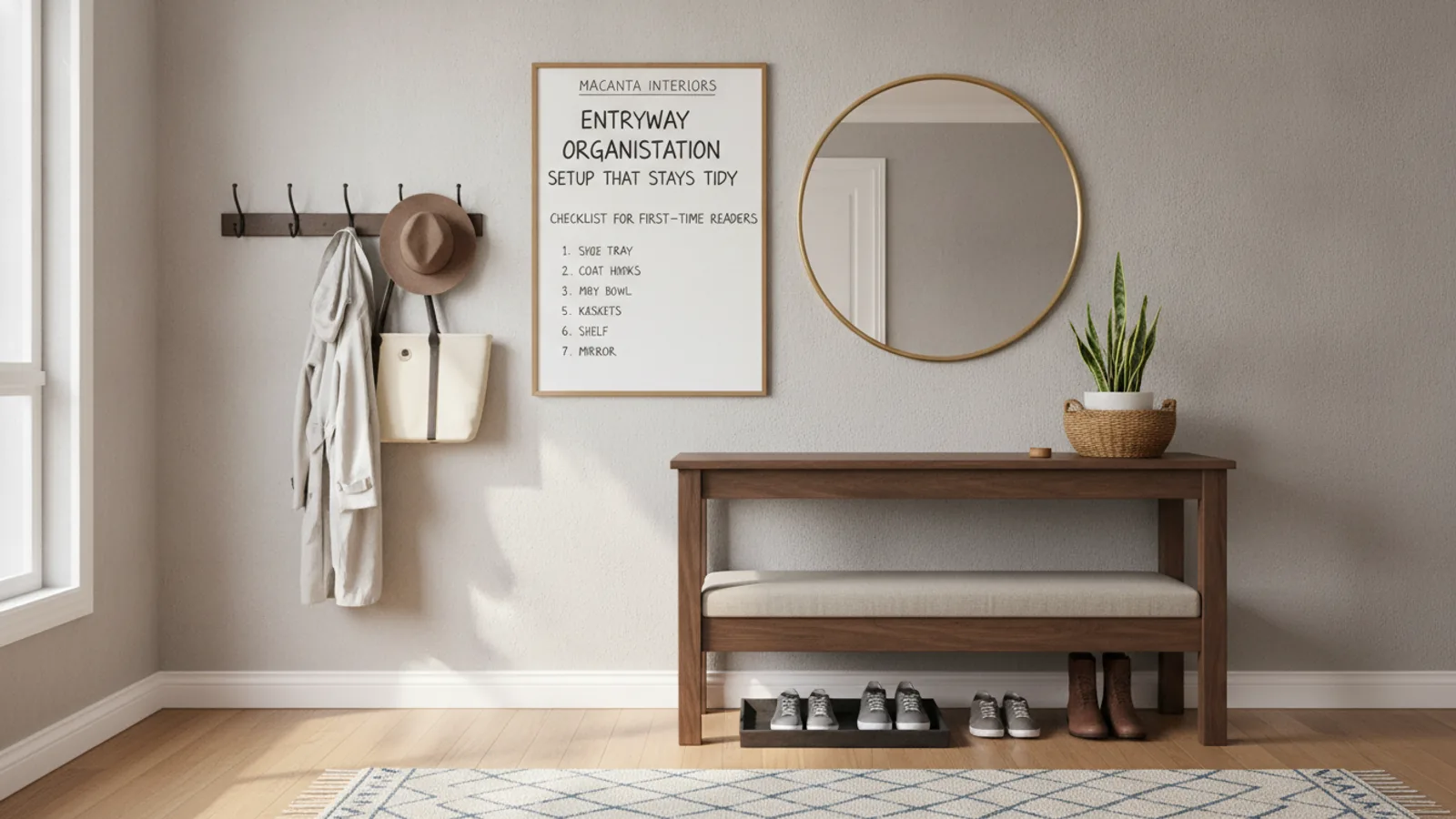
Select storage pieces that prioritize function over aesthetics. Look for a sturdy bench with built-in shoe storage, a coat rack with multiple hooks, or a narrow console table with drawers for smaller items. Always match your measured dimensions to avoid blocking pathways. Drawers are ideal for containing smaller items like gloves, phone chargers, and sunglasses, keeping them out of sight. Open shelves work well for baskets of frequently used items, but closed cabinetry hides mail and shoes better. If your entryway is small, consider vertical storage like tall cabinets or wall-mounted hooks that keep floor space clear. For the everyday items 'hooks' are crucial: install a row of hooks at adult height for coats and bags, and a lower row for kids. Ensure hooks are strong enough to hold heavy winter coats and are not spaced too close together to avoid a jumbled look. The check is whether you can enter, sit to remove shoes, and hang your coat without moving anything else; this ensures your storage matches real-world flow.
Place a Catchall Tray and Mail Organizer Near the Door
Position a tray or shallow dish on a console table or shelf right inside the door to serve as a designated landing spot for keys, sunglasses, and other pocket items. This prevents the common problem of dropping these items on random surfaces and losing track. Next to the tray, place a small vertical file organizer or wall-mounted mail holder for incoming bills and letters. Sort mail immediately over a recycling bin: keep action items, shred sensitive documents, and recycle junk. For letters that need attention, set a place in the organizer, and make it a rule to process them once a week. The catchall tray should be large enough to hold your typical daily items but not so large that it becomes a dumping ground. Also, add a few hooks near the door for leashes or frequently used bags. The check is that after using the entryway, everything you need when heading out is within arm's reach, and outgoing items are already staged; this reduces morning panic and clutter.
Create a Daily Five-Minute Reset Routine
To keep the entryway consistently tidy, establish a short daily routine that takes less than five minutes, ideally before bed or when you get home. The routine should include: hanging up coats that were left out, placing shoes in the designated rack or bin, putting away any items that have migrated from the catchall tray, and moving mail from the tray to the organizer or recycling. Once a week, do a deeper reset: wipe down surfaces, sweep the floor, and reassess every item in the entryway, returning anything that has strayed to its proper spot. Involve all household members by assigning simple tasks to children, like placing their shoes in a bottom bin. You can even create a laminated checklist on the back of the door to help remember the steps. The check for this routine is that you can walk through the entryway at any time without stumbling over clutter or seeing a pile of unsorted items; this ensures the space remains welcoming and functional daily.
Review and Adjust the System Monthly
At the end of each month, take a few minutes to assess how well your entryway organization is working. Notice any problem spots: are shoes always piled by the door because the rack is too far? Do coats overflow because hooks are too few? Are keys often misplaced because the tray is forgettable? Adjust accordingly: add an extra hook, reposition the shoe bin, or move the catchall tray to a more prominent spot. Also, rotate seasonal items: in warmer months, store away heavy coats and boots, freeing up space for lighter gear. Remove any items that have accumulated but aren't part of the system, such as promotional flyers or shoes that no longer fit. This review prevents small issues from becoming big clutter. The check is whether the entryway still looks tidy and functions smoothly after a month of real use; if not, tweak until it feels effortless. This ongoing adjustment ensures the system evolves with your needs.
Quick Reference
| Situation | Action | Why it helps |
|---|---|---|
| Keys are always missing when you're about to leave. | Place a small, decorative bowl on a table or shelf right by the door and always put keys there when you enter; make it a rule to check the bowl before you leave. | Having a single dedicated spot for keys eliminates the common habit of dropping them anywhere, making them predictable and reducing morning search time. |
| Mail piles up on the entryway table and looks messy. | Sort mail immediately over a recycling bin: throw away junk, place action items in a wall-mounted mail holder, and set aside papers that need shredding in a marked bag. | Sorting at the point of entry prevents a pile from forming, and organizing into categories makes it easy to handle paperwork efficiently rather than letting it accumulate. |
| Shoes are scattered all over the floor, creating a tripping hazard. | Install a low open shoe bench or a plastic shoe rack near the door, and every time you remove shoes, place them directly on the rack; encourage family members to do the same. | A designated spot for shoes encourages immediate placement, keeping the floor clear and safe while making it easy to find a pair when you're heading out. |
Common Issues
- The entryway looks tidy after organizing but quickly becomes cluttered again within days.: Implement the daily five-minute reset routine without fail, and involve all household members by assigning specific tasks, such as putting shoes in the bin or hanging up coats, so everyone contributes to maintaining the order.
- Storage furniture takes up too much space and makes the entryway feel cramped.: Measure your space and choose multifunctional pieces like a bench with storage, or install wall-mounted hooks and shelves to utilize vertical space, keeping the floor clear and the entryway open.
- Seasonal items like coats and boots overflow in warmer months making the entryway feel cluttered.: At the start of each season, store away off-season items in a separate closet or under-bed bins, leaving only current-season gear in the entryway to keep it practical and uncluttered.
Advanced Tips
- Install a power outlet near a small shelf or drawer to create a charging station for phones and tablets, making it convenient to keep devices organized and off the entryway table.
- Add a small bench with a flip-up top to reveal hidden storage for seasonal accessories like gloves or umbrellas, keeping them accessible but out of sight.
- Use clear, labeled bins inside cupboards to store infrequently used items like hiking gear or party supplies, ensuring they are easy to identify and retrieve without creating chaos.
Final Checklist
- Have you decluttered the entryway completely and only kept items you use at least weekly?
- Is there a designated spot for every category: shoes, outerwear, keys, and mail?
- Did you install accessible hooks or a bench that fits your daily routine without blocking the path?
- Have you scheduled a daily five-minute reset and a monthly review to keep the system on track?
FAQ
I have a very small entryway with barely any floor space. How can I organize it?
Focus on vertical storage: install a wall-mounted coat rack with hooks at different heights, add a narrow tall cabinet or shelf above the door for infrequent items, and use a small over-the-door shoe organizer on the back of the door. Keep a tiny tray on a shelf for keys and use a wall-mounted mail holder to avoid needing a table. The key is to prioritize essentials only and avoid bulky furniture.
How do I get my family to cooperate with keeping the entryway tidy?
Assign each family member a dedicated hook and a shoe bin labeled with their name, making responsibilities clear. Include them in the reset routine by giving children simple tasks, and make it a game. Set a rule that everyone must spend two minutes at the end of the day to put away their items. Over time, consistent habits will form, and they'll see the benefit of a clutter-free entryway.
I receive a lot of packages and mail. How can I prevent it from piling up?
Immediate sorting is key: recycle junk mail right away, have a designated spot for action items, and slice a 'to do' basket for packages that need handling. For regular deliveries, consider a delivery area outside or a small cart in a closet if space allows. Keep a small table or shelf with a bin for incoming packages, and take time once a week to process them.