Common Mistakes When Planning Choosing Durable Fabrics For A Busy Household
A practical step-by-step guide to common mistakes when planning choosing durable fabrics for a busy household, including preparation, instructions, common issues, tips, and next steps.
Common Mistakes When Planning Choosing Durable Fabrics For A Busy Household
Choosing durable fabrics for a busy household requires more than picking the thickest material. Many people make avoidable mistakes by focusing only on weight, ignoring weave and fiber, failing to test stain resistance, or choosing colors that show wear. This guide explains common pitfalls and offers practical steps to select fabrics that truly withstand daily life, including how to check rub count, understand fiber blends, and plan for maintenance. By following these guidelines, you can avoid costly replacements and keep your home looking fresh.
Fast Answer
- Focus on abrasion resistance (rub count) and fiber type; a tight weave and solution-dyed synthetic fibers generally outperform purely natural fabrics.
- Test stain resistance with a drop of water and oil at the store, and ask for a sample to try at home before committing to a large purchase.
Before You Start
- Measure the exact area you need to cover, including seat depth and arm height, so you can compare like-for-like fabric samples.
- Write down how the room is used: kids, pets, meals, or daily lounging, to prioritize durability features.
- Learn the meaning of key fabric terms: abrasion rub count, pilling, weave tightness, and fiber origin.
- Collect fabric swatches from several sources and label them with the date, price, and where you got them.
Step-by-Step Instructions
Identify the Primary Stress Points
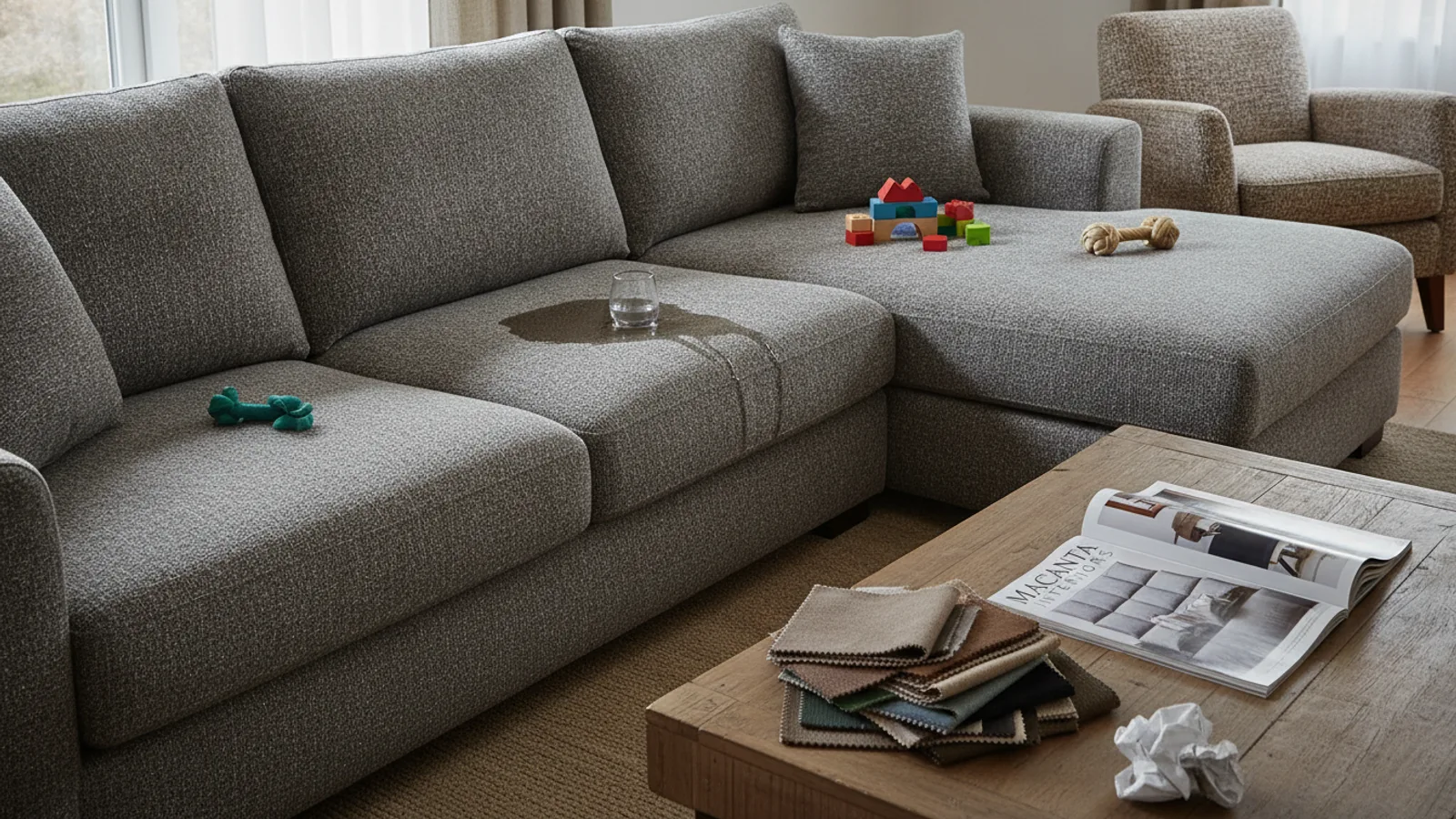
Start by examining the furniture pieces that will receive the most wear. For a sofa, the seat cushions, armrests, and the surface where people lean are the highest-stress areas. For chairs, the seat and backrest are critical. This step matters because it tells you where the fabric will wear first, so you can focus your durability test on those parts. Run your hand over the furniture to feel for existing wear, and note any areas that feel rough or thin. Then, measure the exact size of each stress point, as you will need this information when comparing fabric ratings. For example, a sofa's seat cushion might be 20 inches deep and 60 inches wide, while the armrests are each 8 inches by 10 inches. This measurement ensures you buy enough sample fabric to test. Finally, take a photo of the piece to remember the shape and details that could affect fabric choice, such as tufting or piping.
Understand Fabric Strength Ratings
Fabric durability for upholstery is measured in 'double rubs' using a machine called a Wyzenbeek or Martindale test. A double rub is one back-and-forth motion, and the result tells you how many rubs the fabric can withstand before showing wear. For a busy household with kids and pets, aim for at least 30,000 double rubs, but ideally 50,000 or more. This matters because a low rub count means the fabric will wear thin or tear quickly, leaving you with a ruined piece. When shopping, ask for the specific rub count in writing, not just a vague claim like 'heavy duty.' If the number is not listed, ask the retailer if they can get it from the manufacturer. Also, remember that the test is done with a dry, clean fabric; real-world dirt and stretching can cause wear faster, so choose a rating slightly higher than minimum. Finally, understand that tight weaves, such as those used for denim or velvet, tend to perform better than loose weaves like some linen blends.
Choose Fibers That Resist Real-Life Wear
Fiber type plays a major role in durability. Synthetics like nylon, polyester, and solution-dyed acrylic are the most resilient, often surviving high rub counts and resisting stains. Natural fibers like cotton, wool, and linen are comfortable but tend to pill, fade, or tear more easily. However, blends can offer the best of both. For example, a cotton-polyester blend uses cotton for softness and polyester for strength. The key is to look at the percentage: more synthetic content usually means more durability, but too much can make the fabric feel plasticky. In a busy household, you want a fabric that is easy to clean, so check if it can be wiped down or machine washed. Also, avoid delicate natural fibers like silk or acetate, which are not meant for daily use. Before buying, rub the fabric sample vigorously with your fingers for a minute; if it starts to pill or fuzz, it will do the same on your furniture.
Test Stain and Water Resistance Thoroughly
Stains are a constant issue in busy households, so you need to test how the fabric handles spills. Bring a small spray bottle of water and a little oil (like cooking oil) to the store, but ask permission before testing. Place a drop of each on a hidden area of the sample and wait a few minutes. If the liquid beads and can be blotted off, that is good. If it soaks in immediately, the fabric will likely stain. Also, ask about any stain-resistant finishes applied at the factory; these can help, but they wear off over time. At home, do a more realistic test: put a sample on a flat surface, pour a small amount of red wine or coffee on it, and let it sit for 10 minutes before blotting. This test matters because it reveals how the fabric behaves with real stains, not just water. Remember that no fabric is completely stain-proof; always treat spills immediately.
Evaluate Color and Pattern Longevity
Durability is not only about the material physical strength; the color and pattern must also endure. Light-colored fabrics show dirt, oil, and stains more easily, while dark colors can fade under strong sunlight. Choose mid-tone colors that hide minor blemishes, and consider patterns or weaves that disguise dirt, such as a tweed or a subtle stripe. Also, check the fabric's lightfastness rating; this tells you how well the color resists fading. A rating of 4 or 5 on a scale of 1 to 5 is best for a room with windows. Additionally, think about how the color will look over time as the fabric wears; high-contrast patterns can lose their crispness. To test, leave a sample in a sunny window for a week and see if it fades. If you have kids, avoid white or cream unless you are ready to clean frequently.
Plan for Maintenance and Replacement
a durable fabric is only as good as its care routine. Before buying, read the care label carefully. Some fabrics require professional cleaning, which may not be practical for a busy home. Ideally, choose a fabric that can be spot-cleaned with a mild soap and water. Also, consider how the fabric will be used; if you have kids, you may need to wash cushion covers, so check if they are removable and machine-washable. Plan to vacuum your furniture weekly to remove abrasive dust and dirt that can wear down fibers. Rotate cushions regularly so they wear evenly. Finally, keep in mind that even the most durable fabric will eventually show signs of wear; set aside a budget for future re-upholstery or replacement. By planning for maintenance, you extend the life of your investment and keep your home looking tidy.
Quick Reference
| Situation | Action | Why it helps |
|---|---|---|
| You are comparing two fabrics with similar weight but different rub counts. | Choose the fabric with the higher double-rub rating, ideally above 30,000, and ask for the test report in writing. | Rub count is a direct measure of abrasion resistance; a higher number means the fabric will withstand more wear before developing holes or thinning. |
| You are buying a sofa for a room with pets and children, and you are tempted to buy pure linen for its look. | Instead, select a linen-polyester blend or a performance synthetic that has at least 50,000 double rubs and is easy to wipe clean. | Pure linen is prone to pilling, tearing, and staining, while a blend adds strength and stain resistance, making it more practical for busy, messy environments. |
| You notice a stain on a fabric sample that did not come out with water, but your retailer says it has a stain-resistant finish. | Ask for the exact stain removal instructions and test a different fake stain, like olive oil, to see if the finish helps; if not, consider another fabric. | Finish often only protect against water-based stains; oil-based stains require different treatment, so you need a fabric that can handle the full range of spills. |
Common Issues
- Fabric pilling appears after a few months of use.: Use a fabric shaver to remove pills, but also increase the frequency of vacuuming, and when buying new, choose a tightly woven fabric with a lower pilling rating.
- Stains set in despite spot cleaning quickly.: Check the fabric's cleaning code; if it is 'W' (water-based), use water-based cleaners, but if it is 'S' (solvent), use a dry-cleaning solvent, and always blot, not rub.
- The fabric fades on the side facing a window.: Rotate the furniture or use window treatments like blinds or UV-protective film, and choose fabrics with a lightfastness rating of 4 or 5 for sun-exposed rooms.
Advanced Tips
- Consider using fabric that is 'solution-dyed' rather than 'piece-dyed'; this way the color is infused into the fiber, so it resists fading and is more colorfast over time.
- For a high-traffic area, opt for a tight-weave fabric with a low pile, such as a microdenier, which is less likely to trap dirt and is easier to clean.
- If you are re-upholstering, ask your upholsterer to add a protective barrier layer under the seat cushion to prevent wear on the fabric from the cushion's bottom.
Final Checklist
- Measure all furniture pieces and stress points accurately before you go shopping.
- Confirm the double-rub rating is at least 30,000, ideally higher, and request written proof from the retailer.
- Test a sample for water and oil resistance at home, and note how it feels after a week of daily use.
- Read the care label and check if it matches your cleaning routine, including whether covers are removable and machine-washable.
FAQ
Is higher thread count always mean more durable?
No. Thread count refers to the number of threads per square inch, but for durability, the type of fiber, weave tightness, and abrasion rating matter more. A tightly woven high-quality synthetic fabric can be more durable than a high-thread-count cotton, which may pill. Always ask for the double-rub rating, not just thread count.
Can I make any fabric more durable with a spray-on finish?
Stain-resistant sprays like those containing fluoropolymers can help repel water and oil, but they do not improve the fabric's resistance to abrasion or tearing. They can also wear off over time and may need to be reapplied. For true durability, start with a fabric that is already sturdy and stain-resistant by construction or fiber choice.
What is a reasonable budget for child and pet-proof fabrics?
The cost of durable fabric varies widely based on fiber, weave, and brand, but the price should not be your only guide. Instead, focus on the technical specs, and buy the best you can afford within your home's needs. A moderately priced synthetic blend can outperform an expensive natural fabric. Always compare double-rub ratings and care requirements before making a decision.