How To Plan A Durable Entryway Storage Reset For Everyday Family Use
A practical step-by-step guide to how to plan a durable entryway storage reset for everyday family use, including preparation, instructions, common issues, tips, and next steps.
How To Plan A Durable Entryway Storage Reset For Everyday Family Use
A durable entryway storage reset is about creating a system that works for a busy family every single day. This guide helps you assess your space, sort and purge items, choose the right storage containers, assign a home for each category, and establish simple daily habits. The goal is to reduce clutter, save time during rushed mornings, and teach children where things belong. You'll follow a step-by-step process that includes preparing your space, measuring, labeling, and adjusting. No need for a complete redesign or expensive carpentry—just smart organization and consistent routines. By the end, you'll have an entryway that feels calm and functions smoothly for everyone, even on hectic school days.
Fast Answer
- Start by clearing the entryway completely, categorizing items into keep, toss, donate, and relocate, then measure the space to choose storage that fits your family's actual needs.
- Assign a labeled home for each category—shoes, outerwear, bags, and gear—and set up a daily ten-minute reset routine that everyone can follow to maintain order.
Before You Start
- Gather supplies: several boxes or bags labeled keep, donate, toss, and relocate for sorting, as well as cleaning cloths and a mild cleaner to wipe down surfaces.
- Take photos of your entryway from different angles to see its true dimensions and layout, which helps you choose storage pieces that fit without crowding.
- Set a timer for 30 minutes to avoid feeling overwhelmed, and work with your family to decide which items are used weekly versus rarely, making it easier to prioritize.
- Measure the available floor, wall, and closet space with a tape measure, and note the depth, width, and height limits to avoid buying storage units that won't fit.
Step-by-Step Instructions
Clear and Clean the Entire Entryway
Remove every single item from the entryway, including coats, shoes, backpacks, mail, and decorative pieces. Place them in temporary piles in an adjacent room or on a large table. This gives you a blank canvas and reveals the true state of your storage zones. While the area is empty, wipe down all surfaces, including hooks, shelves, and the floor, to remove dust and dirt that has accumulated. This step matters because starting with a clean space allows you to see exactly what you are dealing with and prevents you from building new habits on a dirty or cluttered foundation. Check that the floor is dry before you begin placing storage back, and ask your family to keep coming area clear during the reset to avoid confusion.
Sort Everything Into Keep, Toss, Donate, and Relocate
Now that everything is out, sort each item into one of four clearly labeled boxes or areas: keep, toss, donate, and relocate. The keep pile should contain only items that your family uses at least once a week, such as everyday shoes and backpacks. The toss pile is for broken or unusable items like worn-out flip-flops or torn umbrellas. Donate items are still in good condition but no longer useful to you, like outgrown jackets or unused decorative vases. Relocate is for items that belong elsewhere in the house, such as mail that needs to go to the office or toys that should be in the playroom. Be decisive—if you are unsure about an item, place it in a 'maybe' box and revisit it after the main reset is complete. This action gives you control over what remains in your entryway, ensuring that every stored piece earns its place.
Measure Your Available Storage Areas
With the entryway clear, take precise measurements of the floor space, wall space, and any existing hooks or shelving. Use a tape measure to record the width, depth, and height of each potential storage zone. For example, measure the floor area under a bench, the wall width above a shoe rack, and the distance between door frames if you plan to hang hooks. Also measure the interior dimensions of any closet you intend to use. These numbers are critical because they prevent you from buying storage bins or shelving that is too wide or too deep, which would waste space and create clutter. Check each measurement twice to avoid mistakes, and write them down on a notepad or your phone. This action matters because precise measurements allow you to select storage units that maximize every inch of your entryway, making the system more efficient and less likely to become messy.
Choose Durable Storage That Fits Your Family's Routine
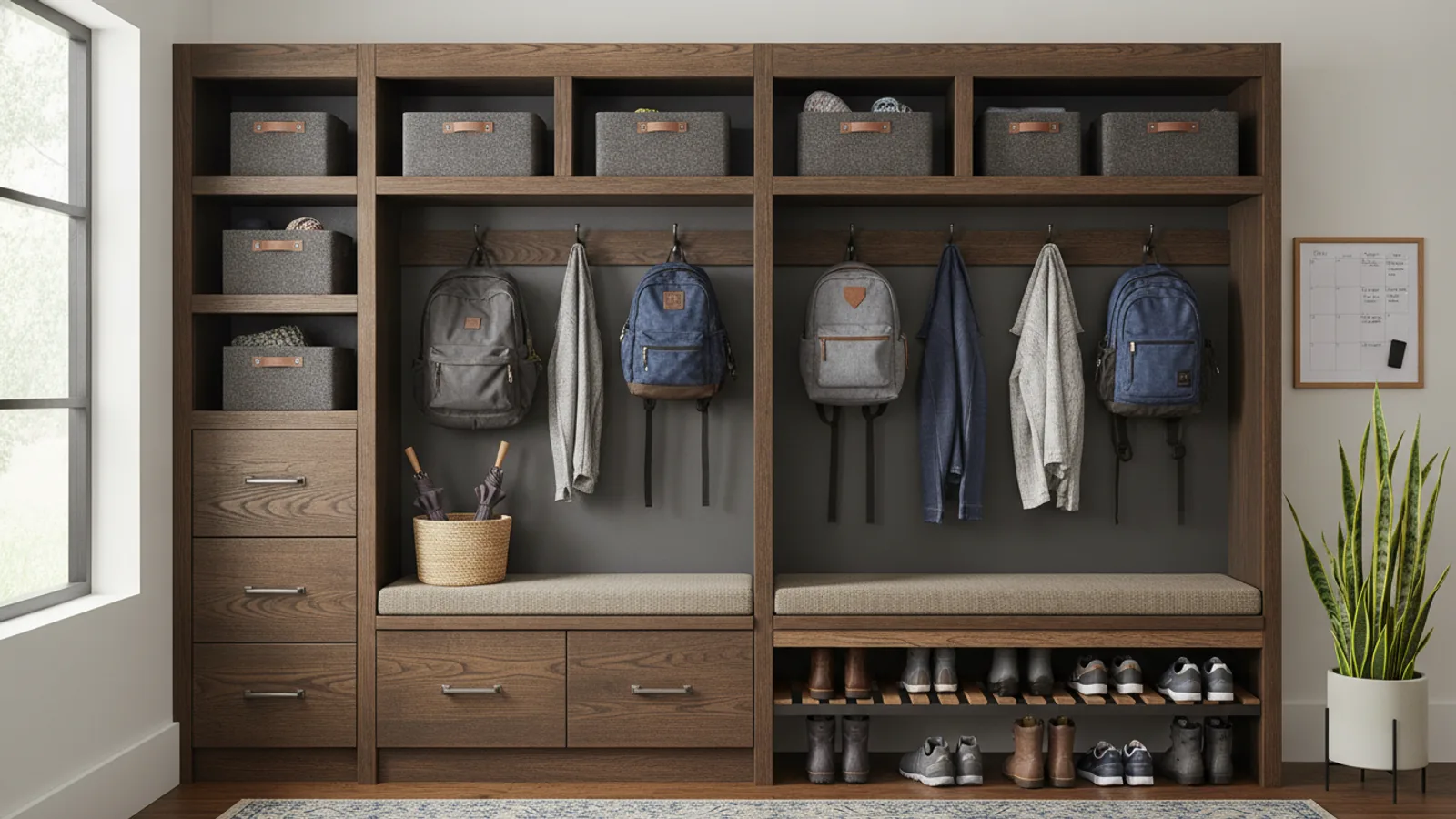
Based on your measurements and sorting results, decide which storage pieces you truly need. For everyday family use, prioritize durability and simplicity: choose sturdy materials like metal, solid wood, or heavy-duty plastic that can handle constant handling. Look for open bins or baskets rather than closed containers, because you can see what is inside and toss items in quickly without opening a lid. Assign one type of container for each category: a low open bin for shoes, wall hooks for coats and bags, a tray for keys and mail, and a vertical shelf for sports gear. Make sure every storage piece you choose has a specific purpose and that you have a designated spot for it. If you already have storage, repurpose it to fit the categories; you may not need to buy anything new. This step matters because selecting storage that matches your daily habits and available space ensures that the system will actually be used, not abandoned within a week.
Assign a Labeled Home for Every Item Category
Now that your storage is in place, assign a specific home for each category of items and label it clearly. For example, use a low basket for school shoes, a taller basket for boots, a hook for each family member's coat and backpack, and a tray near the door for keys and sunglasses. Write labels on paper or use a label maker, and make sure they are visible to everyone in the family, including young children who may not be able to read but can recognize pictures. Include picture labels for non-readers or for items like sports equipment. Place the labeled containers at the exact spot where they will live, so that when a person comes in, they can immediately put their things where they belong. This action matters because labeling reduces the thought required to put items away, creating a habit that sticks. When everyone knows where things go, the entryway stays tidy with less effort, even on chaotic mornings.
Implement a Daily Ten-Minute Reset Routine
The final step is to build a daily habit of resetting the entryway every evening or before bed. Spend ten minutes (or five if you are in a hurry) checking the designated spots and returning any out-of-place items to their labeled bin. Have each family member participate: assign a simple task such as 'shoes in the basket' or 'coats on hooks' so that everyone contributes. The process should be quick and non-negotiable, like brushing teeth, so it becomes second nature. Do not expect perfection; on busy days you may need to remind your kids, but the goal is consistency. This routine matters because it prevents the clutter from piling up into an overwhelming mess that requires a full reset again within a few weeks. A short daily effort keeps your entryway functional and sets a positive example for your children about maintaining shared spaces.
Quick Reference
| Situation | Action | Why it helps |
|---|---|---|
| When you come home from work or school with a handful of mail, keys, and a lunch bag. | Put the keys immediately on the hook or tray by the door, sort the mail into a designated inbox or recycling bin, and hang your lunch bag on its assigned hook. | Taking 20 seconds to put each item in its home prevents the pile-up that leads to clutter and makes the next departure faster because you know exactly where everything is. |
| If you notice that shoes are constantly scattered near the door, even after the reset. | Watch how your family uses the entryway for a day, then relocate the shoe basket to the exact spot where they naturally drop their shoes, and talk to them about the importance of the routine. | Adapting the storage location to real behavior makes it easier for everyone to follow through, because you are working with your family's natural flow rather than against it. |
| When outdoor gear like soccer balls or rain boots clutter the entryway because there is no dedicated spot. | Add a large open bin with a label for seasonal or bulky gear, and place it near the floor or a low shelf where kids can easily reach it, then explain that all outdoor items go in that bin. | A designated catch-all bin for gear that is used daily gives it a clear home, reducing the chance that it will be left on the floor and creating a habit that sticks. |
Common Issues
- The entryway becomes cluttered again within a week because no one puts things away.: Schedule a five-minute family reset time every evening right before bed or after dinner, and make it a rule that no one goes to bed until the entryway is clean. Use a timer to make it a game for kids.
- You bought storage bins that are too small or too large for the space, so they do not fit or they waste space.: Measure the exact dimensions of your entryway and compare them to the storage unit's measurements before purchasing. In the store, use a tape measure to check the item's width, depth, and height, and also measure the inside of the unit to ensure it will actually hold what you need.
- Children cannot read the labels, so they put their toys or shoes in the wrong spots.: Use picture labels or color-coded labels that correspond to each bin, and take the time to show your child exactly where each item goes. On the first day, do the routine a few times together until it becomes automatic.
Advanced Tips
- Install a slim over-the-door shoe organizer on the inside of your hallway closet door to store off-season footwear, leaving only current shoes in the entryway for everyday use.
- Set up a 'launch station' near the door with a small tray or bowl for items you need daily, like sunglasses, work badges, or library cards, and make it a rule to empty the tray into your pocket each morning.
- Take a photo of your ideal entryway setup and post it near the door as a visual reminder for the whole family of how the space should look at the end of the day.
Final Checklist
- All entryway items have been sorted into keep, toss, donate, or relocate piles, and the toss and donate piles have been removed from the home.
- You have measured your entryway and chosen storage pieces that fit within those dimensions, with a labeled home for each category.
- Each family member knows where their personal items go and has practiced the reset routine at least once together as a team.
- You have set up a daily reminder or visual cue to perform the ten-minute reset, and the entryway currently passes the 'two-step test'—you can walk in and out without tripping or stepping over clutter.
FAQ
How often should I do a full reset of the entryway storage?
A full reset is typically needed only once at the start, but you may need a mini-reset every season when your family's gear changes, such as swapping summer sandals for winter boots. If you maintain the daily ten-minute routine, you should only need to do a full sort every few months. If you notice clutter building up within a month, you likely need to reduce the number of items you keep or improve your labeling and storage placement.
What if my family refuses to follow the new storage system?
Start by clearly explaining the benefits, such as less stress in the morning and never losing your keys. Involve them in choosing the storage containers and labels, because people are more likely to follow a system they helped create. Keep the first week simple by focusing on just one habit, like shoes in the bin. Offer gentle reminders and give specific praise when they put something away correctly. Over time, the routine becomes a normal part of coming home.
What should I do with items that do not have a clear home in the entryway?
That is a sign the item may not belong in the entryway at all. Relocate it to the room where it is actually used, such as taking children's toys to the playroom or putting paperwork in a home office set. If you cannot decide immediately, place it in a box marked 'maybe' and revisit it after two weeks. If you have not needed it in that time, donate or recycle it. Avoid letting stray items accumulate by making a rule that everything in the entryway must have a designated spot.