How To Choose An Entryway Organisation Setup That Stays Tidy
A practical step-by-step guide to how to choose an entryway organisation setup that stays tidy, including preparation, instructions, common issues, tips, and next steps.
How To Choose An Entryway Organisation Setup That Stays Tidy
Choosing an entryway organisation setup that stays tidy requires a thoughtful approach that balances daily habits, storage capacity, and visual calm. A successful setup anticipates the flow of people and items, provides a designated place for everything, and includes easy maintenance routines. This guide walks you through assessing your space, selecting furniture and containers, and creating a sustainable system that resists clutter. By focusing on accessibility, simplicity, and regular reviews, you can build an entryway that welcomes you home without becoming a dumping ground.
Fast Answer
- Start by clearing your entryway completely, then sort items into categories (shoes, coats, bags, keys, mail) and measure the space to determine how much storage you realistically need.
- Choose furniture with closed storage, add hooks at two heights, use trays for small items, and commit to a daily 5-minute reset routine to keep the area consistently tidy.
Before You Start
- Gather a tape measure, notepad, and camera to record the exact dimensions and current condition of your entryway, including wall space, floor area, and any existing fixtures.
- Collect all items currently in the entryway and sort them into categories: shoes, outerwear, bags, accessories, mail, and rarely used items, to see what truly needs a home.
- Identify your household’s daily traffic patterns: how many people use the entrance, what activities happen there (dropping keys, removing shoes, sorting mail), and when congestion occurs.
- Decide on a budget range and style preference (e.g., modern, rustic, minimalist) that will guide your furniture and container choices, without committing to specific prices.
Step-by-Step Instructions
Assess Your Entryway Space and Needs
Begin by clearing the entryway completely. This gives you a blank canvas and reveals the true floor and wall space. Use a tape measure to record the width, length, and height of the area, including door swing clearance. Note any obstacles like light switches, vents, or radiators. Next, list the items that must live here daily: shoes for each family member, coats, bags, keys, mail, and pet gear. Estimate how many of each and their sizes. Also consider future needs, like extra guest coats. A practical check: walk through your typical entry routine and see what you touch first and last. Does the space accommodate that flow? This measurement and item inventory prevent you from buying storage that is too small or too large. Without this data, you risk purchasing beautiful pieces that fail to function, causing frustration and clutter to return.
Define Zones for Everyday Items
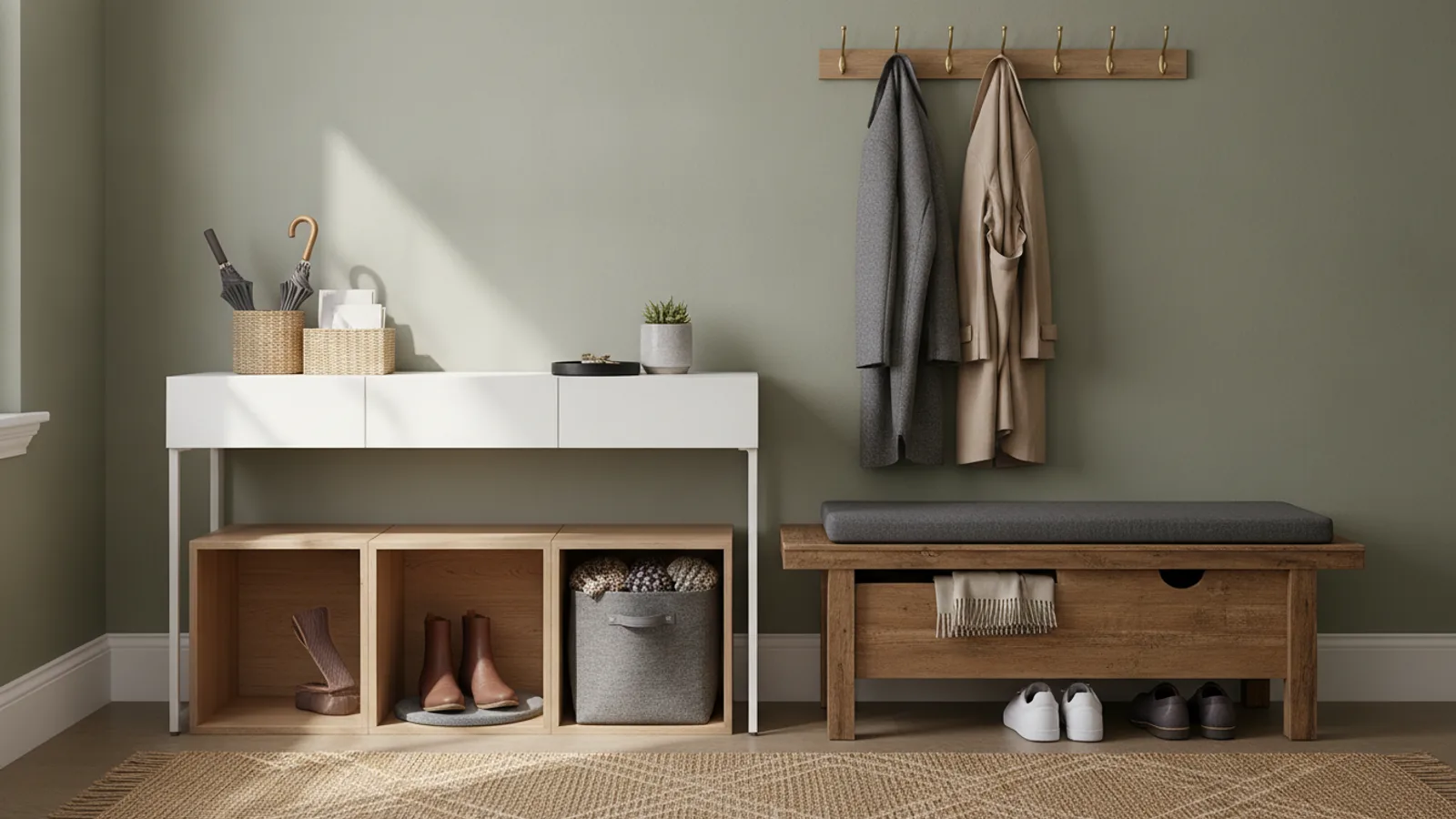
Divide your entryway into logical zones: a landing zone for items you carry in and out, a shoe station, a coat and bag area, and a mail and key spot. For each zone, determine the exact items and approximate quantities. For example, the shoe zone might include one pair per family member plus seasonal extras. The landing zone should be near the door and at a comfortable height, with a flat surface or tray. Use painter's tape on the floor to mark these zones temporarily. Walk through a mock entry: open the door, place keys, remove shoes, hang coat. Ensure the zones align with your movements. This step matters because zoning prevents pile-ups by giving each category a dedicated home. Without zones, items get mixed and become hard to find, leading to clutter as people drop things randomly. By defining these areas, you create a mental map that supports consistent habits.
Choose Storage That Fits and Hides Clutter
Select furniture and containers that match your measured zones. Prioritise closed storage, such as a cabinet or bench with doors, to hide items and reduce visual noise. For shoes, compare the depth of your shelves to the length of your largest shoe. Measure the height for hanging coats: adult coats need about 60 inches, while children need lower hooks. Consider a bench with a lift-up seat for shoe storage and a place to sit. For wall space, install a coat rack or hooks at two heights. Choose baskets or bins that are clearly labelled, ideally with solid fronts to hide contents. A practical check: place your largest item (e.g., a bulky winter coat or tall boot) in the proposed storage to confirm it fits. This step is crucial because properly sized storage prevents overflow and sagging, which leads to abandon. Closed storage also creates a calm appearance, but open shelves can display frequently used items like hats if you prefer. Test door and drawer swings to avoid blocking entry.
Plan a Daily Reset Routine
Design a simple, short routine to restore order every day. For example, each evening, spend five minutes returning items to their zones: shoes into the bench, coats on hooks, keys on the tray, mail in a bin. Set a specific time, like right before bed or after dinner. Keep a small timer or use a phone alarm as a reminder. Involve all household members by assigning small tasks, such as children putting away their own shoes. A practical check: after one week of following the routine, note if any zone consistently overflows or stays messy; adjust the storage or routine accordingly. This matters because a tidy entryway is maintained by habit, not by occasional deep cleaning. Without a reset, clutter accumulates at the choke point, creating a negative first impression and stress. A routine also helps you identify if you need more storage or different zones, turning disappointment into actionable insight.
Sort Mail and Small Items Immediately
Set up a system to handle mail and small essentials the moment you enter. Have a tray or dish for keys, a wallet, and sunglasses. For mail, create three categories: to-do, to-shred, and to-read. Use a small vertical sorter or a box with dividers. As soon as you receive mail, sort it right there; this prevents pile, which often becomes a permanent fixture. A practical check: after two weeks, see if your mail catcher is still accessible or if it has become a clutter magnet. If so, reduce the size or change the method, such as going paperless for bills. This step is vital because mail and keys are the most common entryway clutter. Left unsorted, they create layers of disorder that discourage using the system. Sorting immediately also saves time later and helps you locate important documents quickly.
Review and Adjust Your System Monthly
Schedule a 15-minute monthly review of your entryway to ensure the system still works. Empty each storage unit and examine what is inside. Donate or discard items that have not been used in the previous season, especially clothing and shoes. Check if the number of items has increased and if zones are functioning as intended. Ask yourself: Do I still use this? Does everything have a home? Are the containers still wearable? Adjust by adding or removing hooks, baskets, or shelves. A practical check: identify the primary cause of any clutter, such as too many shoe pairs or no hook for guests’ bags, and address it. This step matters because households change over time: children grow, hobbies change, seasons shift. A system that is never reviewed becomes outdated and collapses. Regular review keeps the entryway aligned with your actual needs, ensuring it stays tidy without constant effort.
Quick Reference
| Situation | Action | Why it helps |
|---|---|---|
| Shoes are piling up by the door within days of cleaning. | Reduce the number of shoes you keep in the entryway to one pair per person per season, and use a bench with storage to tuck them away. | Limited space forces discipline; if you have fewer shoes, they are more likely to be put away, and closed storage hides them from view. |
| Coats and bags are draped over the edge of the bench or on the floor because hooks are too high or too few. | Install a second row of hooks at a lower height (about 40 inches) and add one hook per person, plus two spares for guests. | Lower hooks allow children and shorter adults to hang items independently, and extra hooks prevent overflow that leads to floor clutter. |
| Keys and mail are spread across the entryway table, making it hard to find them. | Place a shallow tray for keys and a small vertical file for mail near the door, and sort mail immediately into ‘to-do’ and ‘to-shred’ piles. | Designated containers and immediate sorting prevent pile-up and reduce time searching; they also keep the surface visually clear. |
Common Issues
- “My entryway quickly becomes a dumping ground for bags, sports gear, and random items.”: Install a storage bench with a lift-up seat and add individual baskets for each person’s gear. Use labels and assign a specific basket to each family member to ensure responsibility.
- “No matter how often I tidy, the area looks messy because shelves are open.”: Replace open shelving with closed cabinets or use solid-front baskets to hide contents. If you must use open shelves, limit displayed items to two or three pieces and keep them uniformly arranged.
- “Guests have no place to put their shoes or coats, so they end up in the living room.”: Add a discreet shoe rack with hooks nearby, and a portable coat rack or a hook panel that can be tucked away when not in use. Provide a basket for guest shoes and label it to invite use.
Advanced Tips
- Integrate a power strip inside a closed cabinet to create a hidden charging station for devices, so cables and gadgets stay out of sight.
- Use a wall-mounted mirror with a small shelf to combine last-minute grooming with a drop-off point for small items, saving floor space and adding brightness.
- Install a retractable bench or folding hooks that can be tucked away when space is tight, allowing occasional seating without permanent footprint.
Final Checklist
- Measure your entryway and document every item you need to store; use this list to guide your purchases.
- Choose closed storage for most items, but add a tray or dish for frequently used keys and a basket for mail to toss.
- Set up a five-minute daily reset routine and assign duties to each household member.
- Schedule a monthly review to declutter and adjust your zones as seasons and family needs change.
FAQ
How do I keep my entryway tidy if my family has a chaotic schedule?
Focus on making storage effortless and visual. Use open baskets for items that are often tossed, but place them out of sight if you prefer. Have each person have a designated basket or hook. Commit to a sign-out rule: if you take something from a zone, return it within 24 hours. Schedule a weekly reset where everyone spends 5 minutes putting things away. Also, reduce the number of items allowed in the entryway; if you have less, it is easier to manage.
What is the best way to store shoes in a small entryway?
Use a bench with a flip-top and interior storage, or a slim vertical shoe cabinet that can hold many pairs in a small footprint. If floor space is limited, install wall-mounted shoe racks or an over-the-door hanger. Never store shoes loose on the floor; a coated steel or plastic tray can contain one day’s active pair. For seasonal rotation, keep only current shoes out and store the rest elsewhere.
Should I use open shelving or closed storage for a tidy entryway?
Closed storage is generally better for maintaining a tidy appearance because it hides clutter and reduces visual noise. Open shelving should be limited to items you use daily and want to display, like a few beautiful baskets or a plant. If you use open shelves, choose a limited palette of containers (e.g., all white boxes) and keep at most one shelf per zone. Closed storage also protects items from dust and makes the space feel more calm and intentional.